If your team says “we need an integration” and your eyes glaze over — read this first
There are only three building blocks your product uses to talk to the outside world: APIs, Webhooks, and (newer) MCP. Pick the wrong one and you’ll over‑engineer, delay launch, and leak money. Pick the right one and you’ll ship your MVP faster, handle scale sanely, and keep costs in check.
This is the 10‑minute, founder‑facing guide. No jargon. India‑relevant. Actionable questions to ask your team before you sign off on sprint tickets.
The 10‑minute mental model
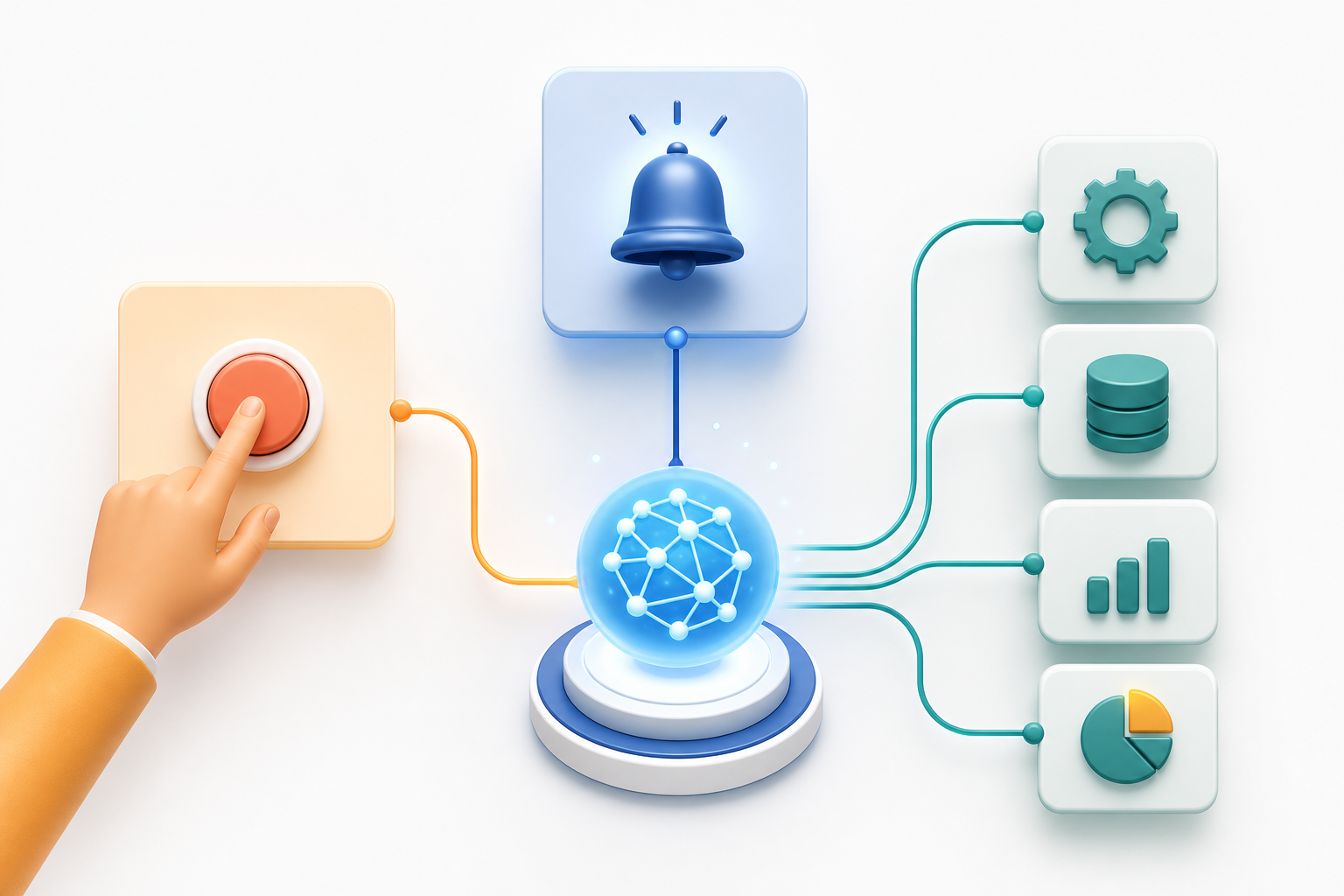
1) API: You ask, they answer (request–response)
APIs are on-demand calls. Your system calls a vendor (e.g., “get order status”, “create invoice”), gets a response, and moves on. Great for reads and short writes when you control timing. Think “pull data when I need it.”
2) Webhook: They notify you when something happens (event‑driven)
Webhooks are vendor-to-you callbacks. When an event occurs (“payment captured”, “shipment picked up”), the vendor POSTs a message to your URL. Great for real-time updates without polling. Think “push events as they happen.”
3) MCP (Model Context Protocol): A standard way for AI agents to use tools
MCP is a shared contract so AI agents (like Claude, IDE agents) can safely call tools you expose. It wraps your APIs or external services into “tools” that an AI client can discover and call. Useful when your product has an AI assistant that must operate many tools consistently across vendors. MCP is not a replacement for APIs or webhooks; it is an organized layer over them, designed for agent/tooling ecosystems.
Key truth that trips up teams: Webhooks are asynchronous; MCP mostly assumes synchronous tools. If your tool kicks off something long‑running that finishes later (e.g., a payment or video render), you still need webhooks or a queue, then surface status back to the agent. That’s the heart of the “MCP + webhook” conversation you’ll see online.
Side‑by‑side at a glance
Dimension | API | Webhook | MCP |
|---|---|---|---|
Trigger | You request | Vendor pushes event | AI client calls your exposed tools |
Best for | Reads; short writes | Real‑time updates; async outcomes | AI assistants orchestrating many tools |
Latency | Immediate, you control timing | Near real‑time, vendor controlled | Immediate call; long tasks need callback/poll |
State handling | Straightforward | Needs retries, dedupe, idempotency | Simple for sync; complex for async (bridge via webhooks/queues) |
Complexity | Low–Medium | Medium–High (reliability infra) | Medium (tool spec) → High (agent workflows) |
Lock‑in risk | Vendor SDKs/quirks | Webhook formats vary | Client/tooling ecosystems evolve; keep your core behind clean APIs |
India examples | Fetch GSTIN; create Cashfree payout | Razorpay payment.captured; Delhivery tracking updates | Expose “create invoice”, “check KYC” to an AI ops assistant |
Cost drivers | Call volume + vendor fees | Event volume + queues/retries | Agent calls + tool hosting + async bridge |
Which one do you need? A founder‑friendly decision flow
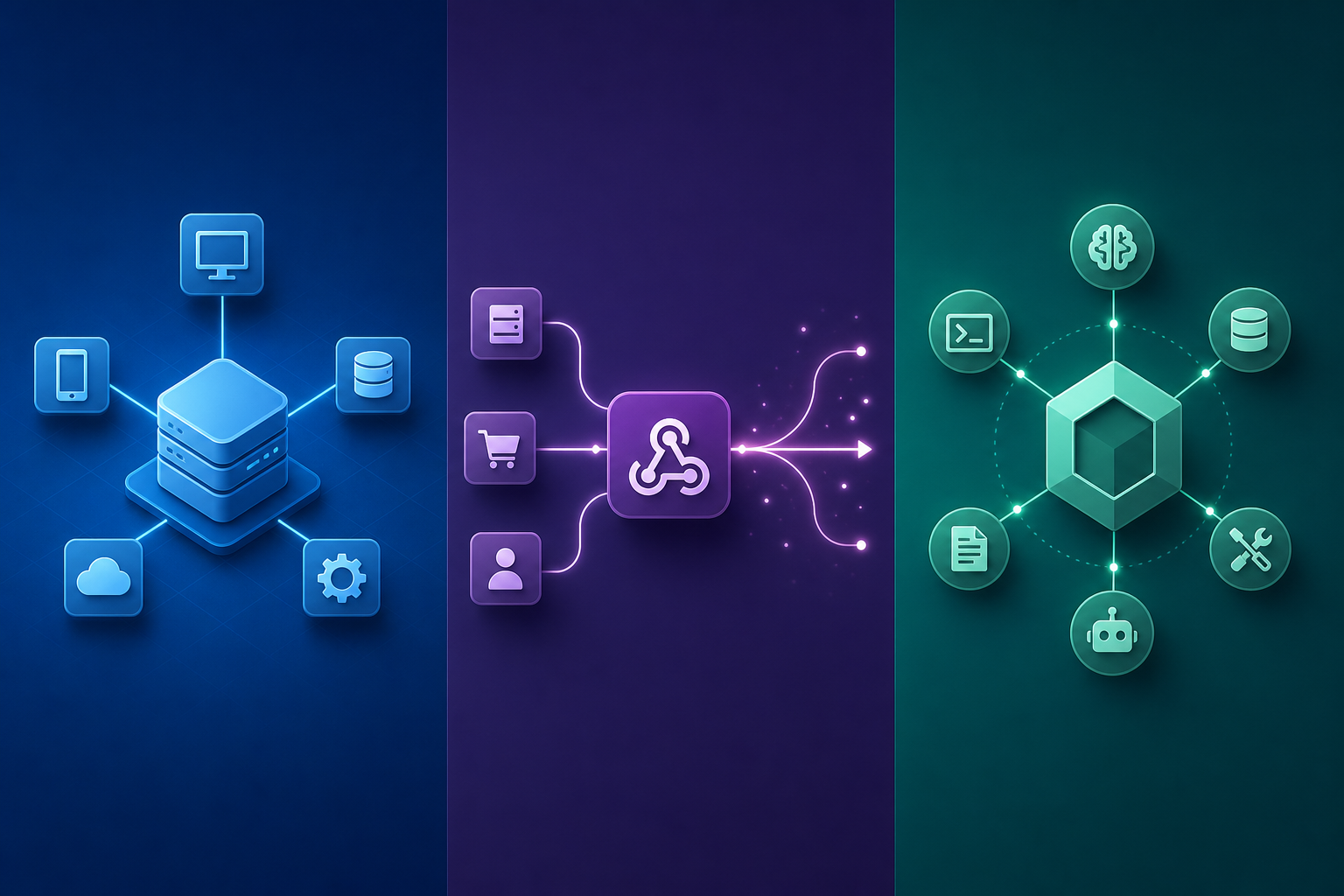
Ask these in order:
Is the action a quick fetch/update where you control timing? Use an API call.
Does something finish later and you want to react immediately? Add a webhook listener.
Do you want an AI assistant to reliably use multiple tools the same way across vendors? Wrap tools with MCP, but still keep APIs/webhooks underneath.
Rule of thumb: Build an API-first core. Add webhooks for async events. Introduce MCP only if you actually have an AI assistant or agent that needs it. Most over‑spend happens by making everything “agentic” before proving the workflow. Anthropic’s own playbook says: workflows first; agents when steps can’t be pre‑specified.
India‑specific use‑cases mapped to API, Webhook, and MCP
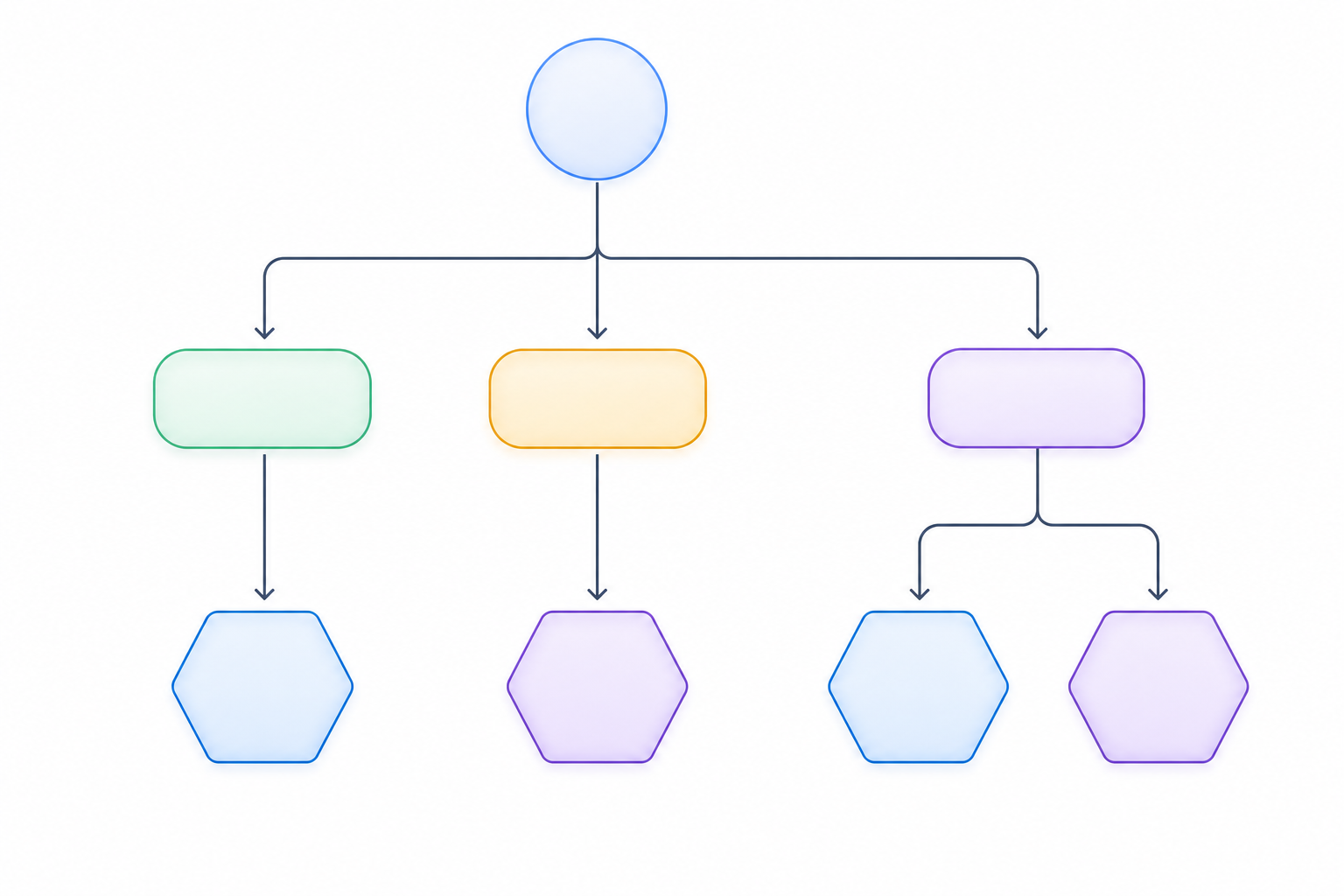
UPI and payment gateways (Razorpay, Cashfree, PayU)
Collect payment link: API
Know when payment is captured/failed/refunded: Webhook
AI ops assistant to reconcile payouts across gateways: MCP on top of your reconciliation API; webhooks still feed status into your system of record
GST e‑Invoicing and e‑Way Bill
Create IRN/e‑invoice: API via your GST provider
Track IRN generation or rejection events: Webhook (if provider supports); else poll
AI back‑office bot that “prepares and files invoice”: MCP exposing your internal “prepare invoice” and “submit to GSP” tools
WhatsApp Business API (BSPs like WATI, AiSensy, Gupshup, Meta Cloud)
Send a message/template: API
Receive incoming messages, delivery/read receipts, opt‑outs: Webhooks
AI sales assistant that qualifies leads: MCP can coordinate tools (CRM lookup, WhatsApp send, meeting book). The conversation events still arrive via webhooks.
Related reads: If you’re choosing a BSP, see our buyer’s guide: WATI vs AiSensy vs Custom WhatsApp AI. And for MVP scope control, read From Idea to Launch: How to Build a Winning MVP.
Logistics and commerce (Delhivery, Blue Dart, Shiprocket, ONDC, Shopify)
Create order/label: API
Pickup, in‑transit, delivered, RTO events: Webhooks
AI support bot that answers “Where is my order?”: MCP tool calls your order status API; the truth is kept fresh by webhooks from carriers/ONDC NPs
HR/Payroll and KYC
Fetch KYC result, create candidate: API
KYC completed/failed notifications: Webhooks
AI HR copilot to run checks and draft letters: MCP over internal tools
Where MCP + webhook trips teams (and how to avoid delays)
Competitor write‑ups highlight a real gap: MCP tools are typically synchronous, but your vendors talk back asynchronously via webhooks. When you kick off “start payout” or “render video” inside a tool, the final status lands later. Here’s the pragmatic, production‑ready pattern we recommend:
API call kicks off the job and immediately returns a jobId (synchronous response).
Webhook listener receives vendor events. Verify signatures, dedupe by eventId, and store updates against jobId (idempotent write).
MCP tool exposes “get_job_status(jobId)” for the AI client to poll or subscribe through your own event bus if supported.
This pattern keeps reliability inside your system of record. The AI layer (MCP) stays thin and safe. If you’re unsure whether you even need agents, read our founder playbook: Agents vs Workflows.
Money: realistic India budgets and cost drivers
These are typical founder‑level ballparks we see in India. Your mileage will vary with scope and volume, but use this to sanity‑check quotes:
Simple API integration (1–2 endpoints, no complex auth): ₹40k–₹1.2L one‑time, then negligible monthly infra.
Webhook ingestion with reliability (signature verify, retries, dead‑letter queue, dashboards): ₹1L–₹3L one‑time; ₹3k–₹15k/month for queues, workers, logs, monitoring depending on volume.
MCP tool layer on top of your APIs (expose 3–6 tools, auth, basic guardrails): ₹1.5L–₹4L one‑time; ₹2k–₹10k/month to host.
Agent workflows (if you truly need them): expect higher latency/cost; keep scope tight and measurable.
Hidden costs to ask about up front:
Webhook retry storms: what happens if our endpoint is down for 15 minutes?
Idempotency: can we guarantee no duplicate payouts/orders?
Observability: do we have dashboards and searchable logs per eventId/orderId?
Backfill: if we miss events, can we reconcile via API safely?
For AI usage costs across models, see our cost‑control guide: LLM Model Routing Strategy.
MVP architecture you can approve without over‑engineering
1) Keep a clean core API
Your business logic should live behind your own REST/GraphQL endpoints. Vendors can change; your core stays stable.
2) Add a thin webhook ingestion lane
Public endpoint (behind a gateway) receives events
Verify signatures and timestamps
Push to a lightweight queue (SQS/Cloudflare Queues/PubSub)
Worker processes the event idempotently → updates your DB
3) Optional: expose an MCP tool layer
Wrap a small set of safe operations (“create_invoice”, “check_payment”, “send_whatsapp_template”)
For long tasks, return a task/jobId and rely on your own status store that is kept fresh by webhooks
Tight scopes and clear tool descriptions reduce agent hallucination and cost
Anthropic’s guidance matches our experience: start with direct calls and simple workflows; only add agentic logic when steps can’t be pre‑specified. It lowers cost, risk, and failure rate.

Security, compliance, and India‑specific gotchas
PII and RBI guidelines: keep payment and KYC data access minimal; store webhook payloads only as needed.
GST e‑invoice SLAs: if you rely on webhooks from a GSP, also plan an API backfill job to reconcile missed IRNs.
WhatsApp BSP policies: ensure you capture user opt‑in/opt‑out events via webhooks; keep audit logs.
Time zones and holidays: queue workers must handle spikes (festival sales) without dropping events.
The 7 founder questions that prevent 80% of integration delays
What’s synchronous vs asynchronous in this scope? List each action and its final status source (API vs webhook).
How do we verify webhook authenticity and dedupe events?
What’s our idempotency strategy for payouts, orders, and messages?
What happens if the vendor retries for 24 hours?
Where can I see a dashboard of last 24 hours of events, errors, and dead letters?
If we add an AI assistant later, what is the minimal MCP tool surface we’ll expose?
What’s our plan to switch vendors (e.g., Razorpay → Cashfree) without rewriting the app?
Founder‑level buying checklist (API, Webhook, MCP)
Scope doc that separates API calls vs webhook events; each with example payloads and error codes
Staging endpoints and test keys; webhook replay tool access
Idempotency keys plan, retry/backoff policy, and dead‑letter handling
Observability: request tracing, searchable logs, and alerts
Change management: how will we version schemas, deprecate fields, and communicate vendor changes?
For MCP: tool names, input/output contracts, safety guardrails, and what the agent is explicitly not allowed to do
Timelines to expect (so sprints don’t slip)
Single API integration (straightforward): 3–7 working days
Webhook ingestion + reliability (one vendor, 3–5 event types): 1–2 weeks
MCP tool layer (3–6 tools, no complex agents): 1–2 weeks
Parallelize wisely: build your API core and webhook lane together; add MCP last when the workflows are proven. This keeps your risk low and launch date intact.
The punchline
APIs, webhooks, and MCP aren’t competing choices. They stack:
APIs for controlled actions and reads
Webhooks for real‑time external outcomes
MCP only when an AI assistant must use your tools safely and consistently
If you want a deeper operating model for tech leadership, see our flagship hub: The Fractional CTO Operating Manual.
What we do at Rian Infotech (why this matters)
We build calm, cost‑sane AI products for Indian founders. Our bias is MVP first, workflows over hype, and observability from day one. If your roadmap mentions “integration”, “webhook”, or “MCP” and you want a second opinion before you commit budget, we’ll review scope, risk, and costs with you.
If you want a second opinion on your tech, here’s how we think about it — book a free strategy call.
Frequently Asked Questions

Rishav Shankar
Rishav Shankar is a calm-tech architect who blends AI, engineering, and psychology to design systems that think before they act. He builds products that turn complex human problems into intuitive digital experiences, redefining how founders and teams operate. At the intersection of automation, strategy, and imagination, Rishav is creating the future one intelligent workflow at a time.
Comments
Loading...