Here's the number that trips up most founders shopping for WhatsApp AI in 2026: the platform fee is the smallest line item on your bill. Meta's per-message charges, BSP markups, and the hidden cost of a bot that can't actually qualify a lead will dwarf whatever you pay AiSensy, Wati, or a custom dev shop each month. Yet almost every comparison article online stops at "which plan is cheapest" — which is the wrong question.
Quick verdict (2026)
- Choose WATI if you want a polished, no-code shared team inbox with templates and fast setup, and per-seat pricing plus BSP markup is acceptable.
- Choose AiSensy if you are broadcast and marketing heavy and want a lower entry price for campaigns and simple automations.
- Go custom on the Meta API if you need real AI that qualifies leads, reasons over your catalog and CRM, handles Hindi and Hinglish, and you want full control of your data with no per-message markup.
Why This Matters Now
WhatsApp is no longer a side channel for Indian businesses — for real estate, D2C, coaching, and services businesses, it's often the primary sales channel. But 2026 has made the buying decision genuinely harder, not easier. Meta shifted its billing model from per-conversation to per-delivered-template-message in mid-2025, so your cost now scales directly with message volume rather than a flat 24-hour window fee. On top of that, India's marketing message rate moved up again this year. Every BSP builds its markup on top of that same Meta rate card, so the "cheapest" platform on the pricing page can still be the most expensive one at scale once markup and message mix are factored in.
At the same time, the ceiling on what a WhatsApp bot can do has risen sharply. A ₹1,500/month SaaS plan and a ₹15 lakh custom AI build can both technically "send WhatsApp messages" — but only one of them can hold a multilingual sales conversation, qualify a lead against your CRM rules, and escalate to a human at the right moment. Picking the wrong one means either overpaying for capability you don't need, or hitting a capability wall in month three when you actually need it.
The Three Paths, Honestly Compared
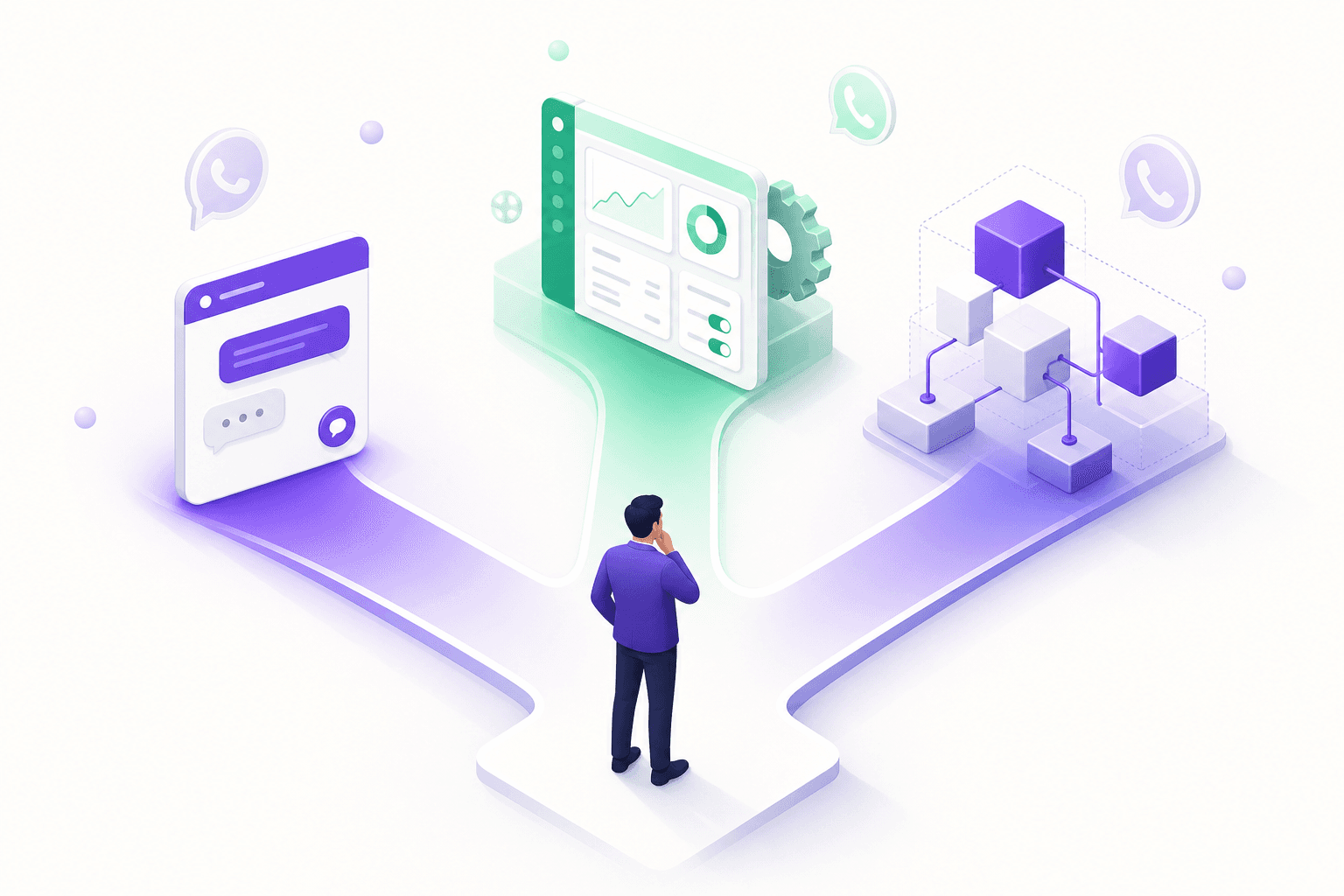
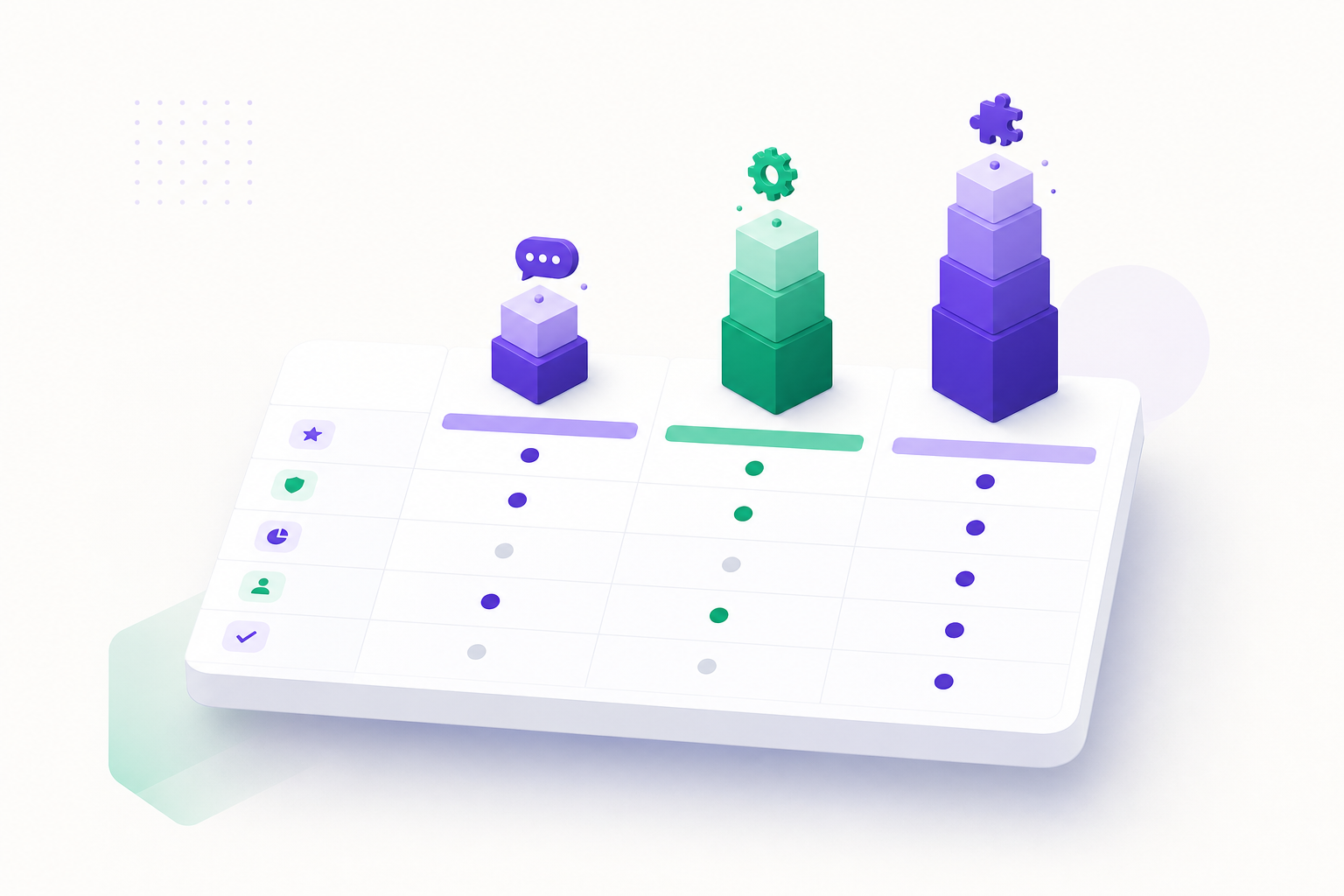
There are really only three routes into WhatsApp AI right now: a broadcast-first SaaS platform (AiSensy), an inbox-and-integration-first SaaS platform (Wati), or a custom-built AI layer on top of the raw WhatsApp Business API. Interakt sits close to Wati in positioning, so we've folded it into the table for reference.
Feature and Positioning Snapshot
Dimension | AiSensy | Wati / Interakt | Custom WhatsApp AI Build |
|---|---|---|---|
Core strength | Volume broadcast, lowest platform fee, Meta Ads click-to-WhatsApp integration | Agent inbox, pre-built CRM/e-commerce integrations (Shopify, Zoho, HubSpot, Razorpay) | Purpose-built conversation logic, deep CRM/ERP hooks, full data ownership |
Entry pricing (2026) | From roughly ₹999–1,500/month | From roughly ₹2,142–2,499/month | No monthly SaaS fee; project cost instead (see below) |
AI capability out of the box | AI Flow Builder, AI template generator — good for structured flows | Basic chatbot builder; AI depth varies by BSP tier | Whatever you specify — multilingual NLU, lead scoring, RAG over your catalog, CRM-aware qualification |
Best fit | D2C brands doing high-volume broadcast + retargeting | Businesses already living inside Shopify/Zoho/Salesforce workflows | Real estate, coaching, BFSI, or any business where the conversation itself is the product |
Time to launch | Days | Days to 1–2 weeks | 2–6 weeks depending on scope |
Ongoing cost driver | Message volume + modest markup | Message volume + markup (can be steeper at scale — one BSP's markup alone added roughly ₹17,600/month at 100,000 marketing messages in recent estimates) | Meta's raw per-message rate + your own infra/maintenance cost |
What the Bill Actually Looks Like
Every WhatsApp AI bill in India, regardless of provider, is built from three layers:
Meta's per-message rate — fixed and identical across every BSP. As of 2026, India's marketing-template rate sits at roughly ₹1.09 per message, with utility/authentication templates far cheaper at around ₹0.115–0.145 per message. Messages you send inside a customer-initiated 24-hour window remain free.
The BSP's platform fee — your monthly subscription to Wati, AiSensy, Interakt, or another BSP, which buys you the sending infrastructure, template management, and (usually) a chatbot builder.
The BSP's markup on Meta's rate — often invisible in the pricing page, ranging anywhere from 0% to 25% depending on the provider and your plan tier. This is where "cheap" SaaS plans quietly become expensive at scale.
Add 18% GST on top of Meta's charges, and you have your true landed cost. A custom build strips out the BSP markup layer entirely — you pay Meta's rate directly plus your own infrastructure and maintenance — but you take on the engineering cost of building and running the conversation layer yourself.
Total Cost of Ownership: SaaS vs. Custom
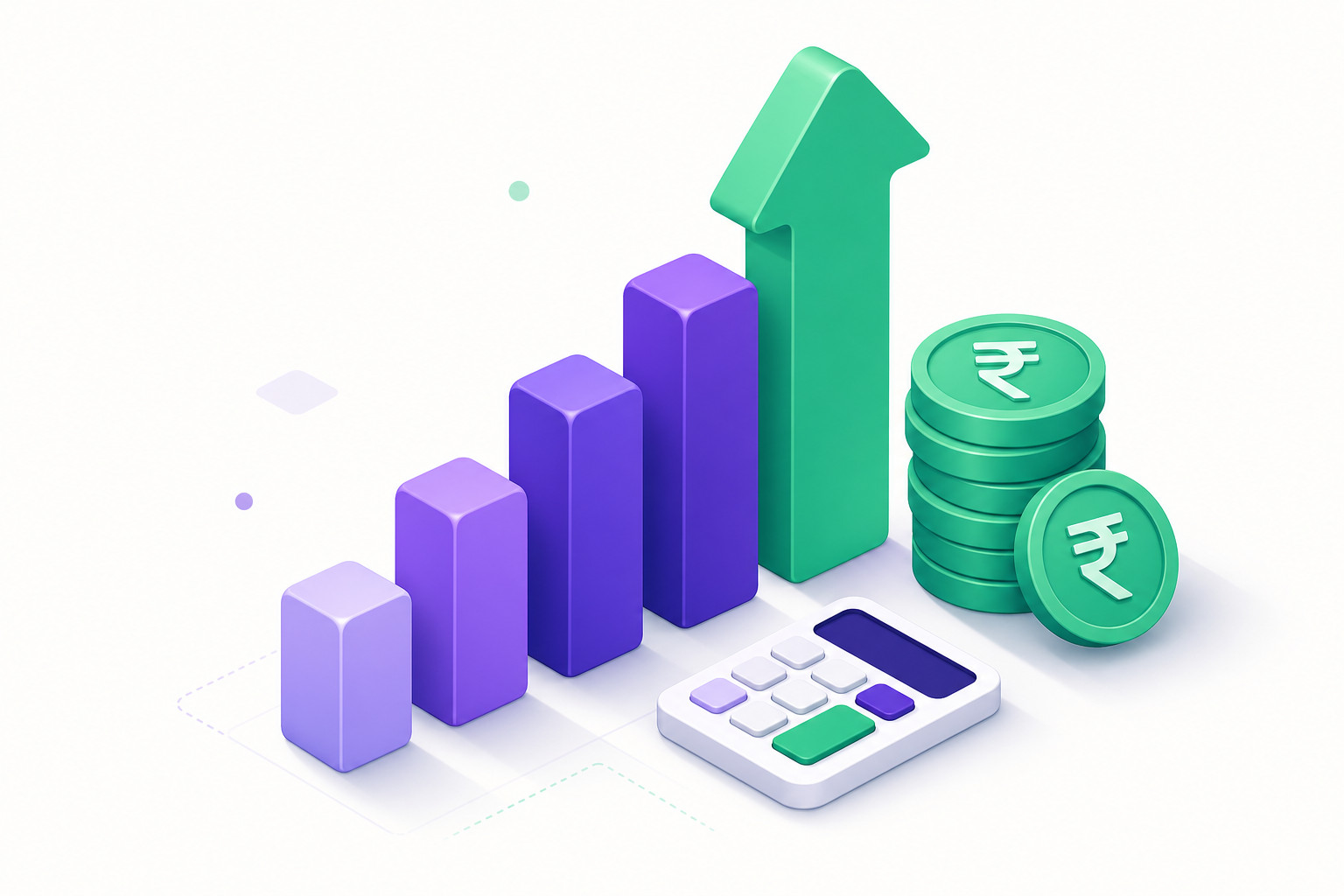
This is the calculation most comparison articles skip. Here's how to actually run it for your business:
Estimate monthly message volume by category. Marketing broadcasts, utility notifications, and customer-initiated replies are billed completely differently — lump them together and your estimate will be wrong by 3–5x.
Multiply by Meta's rate card, then add your BSP's markup. Ask the BSP directly for their markup percentage; it's rarely on the public pricing page.
Add the platform subscription fee for your required tier. Higher tiers usually unlock more agents, more automation flows, and lower markup — the tradeoff isn't always obvious from the plan names.
For a custom build, price the one-time build cost separately from the ongoing cost. A well-scoped custom WhatsApp AI build for a single use case (e.g., real estate lead qualification) typically runs a fixed project fee, then a much smaller ongoing hosting and Meta-message cost with no BSP markup at all.
Run the breakeven. If your BSP markup at your expected volume exceeds what a custom build's amortized cost would be over 12–18 months, custom wins on pure economics — before even counting the capability gap.
In practice, the crossover point tends to show up between 50,000 and 150,000 messages a month for businesses with complex qualification logic — which is exactly the volume range where SaaS markups start compounding.
A Real Example: Why We Went Custom for Real Estate
When we built a Hindi/Hinglish WhatsApp AI for a real estate client, a SaaS chatbot builder could have handled the "send a broadcast, log a reply" part in an afternoon. It could not handle the part that actually mattered: understanding a lead typing in a mix of Hindi, English, and regional slang, qualifying budget and timeline against the client's CRM rules in real time, and only routing site-visit-ready leads to a human agent. That logic doesn't live in a drag-and-drop flow builder — it needed a custom NLU and scoring layer sitting on top of the raw WhatsApp Business API. The result was a roughly 60% drop in unqualified leads reaching the sales team, deployed in about three weeks. We go deeper on that build in our WhatsApp AI for real estate case study.
That's the pattern worth internalizing: SaaS platforms are excellent at sending and tracking messages. They are not built to reason about a conversation. If your WhatsApp channel is mostly notifications, order updates, and broadcast marketing, a SaaS BSP is the right call — it's faster, cheaper to start, and someone else maintains the infrastructure. If the conversation itself needs to make a judgment call, custom is usually the only option that actually works.
Quick-Win Action Steps
Pull your last 3 months of WhatsApp message volume split by marketing, utility, and customer-initiated categories — this is the single input that determines your real cost, not the plan price.
Ask any BSP you're evaluating for their exact markup percentage over Meta's rate in writing, not just their subscription price.
List every decision your WhatsApp bot needs to make (language detection, budget qualification, escalation rules) — if that list has more than 2–3 conditional branches, a drag-and-drop flow builder will start breaking down.
Run the 12–18 month TCO comparison from the framework above before signing an annual SaaS contract.
Start with a pilot on whichever path you choose — a 2-week SaaS trial or a scoped one-use-case custom build — rather than committing to a year of either upfront.
For the setup mechanics — official API access, BSP approval, and India-specific pricing tiers — see our companion guide on WhatsApp Business API setup and pricing in India.
Conclusion
There's no universally "right" answer between Wati, AiSensy, and custom — there's only the right answer for your message volume, your conversation complexity, and how much of the decision-making you need your bot to own. Run the TCO math before the sales call, not after the contract.
Ready to implement this for your business? Talk to the Rian Infotech team →
Updated July 2026
Jump to: Comparison • Costs • TCO • When to choose • FAQs
WATI vs AiSensy: Side-by-Side (India, 2026)
Feature |
WATI |
AiSensy |
Custom |
|---|---|---|---|
Setup |
Self‑serve WABA onboarding; agent inbox + team setup |
Self‑serve WABA onboarding; broadcast‑first setup |
Direct Meta API (Cloud) + your infra; built to spec by Rian Infotech |
BSP |
Official Meta BSP (WATI) |
Official Meta BSP (AiSensy) |
No BSP markup; built over Meta WhatsApp Cloud API |
Templates/Flows |
Template manager, flow builder, strong CRM/e‑com apps (Shopify, Zoho, HubSpot, Razorpay) |
Template manager and visual flow builder optimized for campaigns |
Custom flows mapped to your CRM/ERP and sales logic |
AI support |
Rule‑based bots; LLM assists vary by setup/integrations |
AI Flow Builder and assists; strong for structured flows |
Multilingual NLU, RAG over your data, CRM‑aware reasoning, human handoff |
Monthly fee |
From ~₹2,142–2,499/mo (platform only) |
From ~₹999–1,500/mo (platform only) |
No SaaS fee; project‑based pricing |
India conversation rates |
Follows Meta India template/message rate card; BSP markup may apply + GST |
Follows Meta India template/message rate card; BSP markup may apply + GST |
Pay Meta’s raw India rate card directly; add infra/maintenance |
Broadcast caps |
Subject to WhatsApp quality‑based limits; supports large sends with opt‑ins and warm‑up |
Optimized for large broadcasts; same WhatsApp quality limits apply |
Same Meta limits; can design warm‑up, routing, and compliance flows |
APIs/Webhooks |
REST APIs/webhooks; popular CRM/e‑com integrations |
REST APIs/webhooks; campaign/broadcast tooling |
Full control over APIs, events, data storage, and security |
Onboarding time |
Days to 1–2 weeks (verification + integrations) |
Days (fast broadcast go‑live) |
2–6 weeks depending on scope |
Best for |
Agent‑led teams needing inbox + CRM apps |
D2C and performance marketers doing high‑volume broadcast/retargeting |
Sales/service orgs where conversation quality drives ROI (real estate, coaching, BFSI) |
Last checked: {{date}}. Sources: WATI Pricing, AiSensy Pricing, Meta WhatsApp pricing.
When to choose each
Choose AiSensy if you’re D2C/performance‑marketing led, need quick broadcast journeys, and want the lowest visible platform fee.
Choose WATI if agents live in the inbox and you rely on Shopify/Zoho/HubSpot/Razorpay integrations with structured handoffs.
Choose Custom if you need multilingual, CRM‑aware AI that qualifies, schedules, scores leads, and owns data without BSP markup.
Related guides: WhatsApp API pricing in India • Build a WhatsApp AI • Hindi/Hinglish real‑estate bot case study
FAQs
Is AiSensy better than WATI?
Neither is universally “better.” AiSensy suits high‑volume broadcasts with a lower platform fee. WATI suits teams that need an agent inbox and deeper CRM/e‑commerce integrations. If you need multilingual, CRM‑aware AI and full data control, go custom.
Which is cheaper in India (2026)?
For low volumes, AiSensy’s platform fee is usually lower. At scale, Meta’s per‑message charges plus each BSP’s markup dominate—so either can be cheaper depending on your mix. Run a TCO on your message categories and markup. See: WhatsApp API pricing in India.
Do WATI and AiSensy support AI agents?
Both offer bot builders and AI assists good for structured flows. For sales‑grade, multilingual AI that reasons over your catalog/CRM with reliable handoff, a custom build on the Meta API is more flexible.
How do I migrate between WATI and AiSensy (or to custom)?
Confirm WABA ownership and number portability, export templates/opt‑ins, recreate flows, re‑verify display name if needed, warm up sending, switch webhooks/APIs in your CRM, then run a parallel cutover.
Are there broadcast caps or BSP limits in India?
Yes—WhatsApp enforces quality‑based messaging limits and opt‑in rules. Both BSPs support large sends with proper warming and compliance. Limits are tied to Meta’s policies, not just the BSP UI.
Do both offer APIs and webhooks?
Yes. Both expose REST APIs and webhooks and connect to popular CRMs/e‑commerce. A custom build gives you full control over eventing, data storage, and orchestration.
Frequently Asked Questions

Rishav Shankar
Rishav Shankar is a calm-tech architect who blends AI, engineering, and psychology to design systems that think before they act. He builds products that turn complex human problems into intuitive digital experiences, redefining how founders and teams operate. At the intersection of automation, strategy, and imagination, Rishav is creating the future one intelligent workflow at a time.
Comments
Loading...