Most founders ask "fractional or full-time CTO?" as if it's a permanent fork in the road. It isn't. It's a stage question with a shelf life. The right answer at ₹50L in the bank is almost never the right answer at Series A, and the founders who get burned are the ones who pick one model and never revisit it. A full-time CTO hired too early can burn months of runway before product-market fit even exists. A fractional CTO kept too long can quietly cap your engineering velocity right when you need to scale.
Why This Decision Matters More in 2026
Two things changed the calculus this year. First, AI-assisted development has compressed the engineering headcount a pre-Series A startup actually needs. A 3-4 person team with the right tooling now ships what used to take 8-10 people, which stretches the window where a fractional CTO is genuinely sufficient. Second, investors have gotten sharper about diligence on technical leadership. A fractional arrangement that looked fine in a seed pitch can raise questions at Series A if there's no credible plan to convert it. Founders need a framework, not a default.
What Each Model Actually Gives You
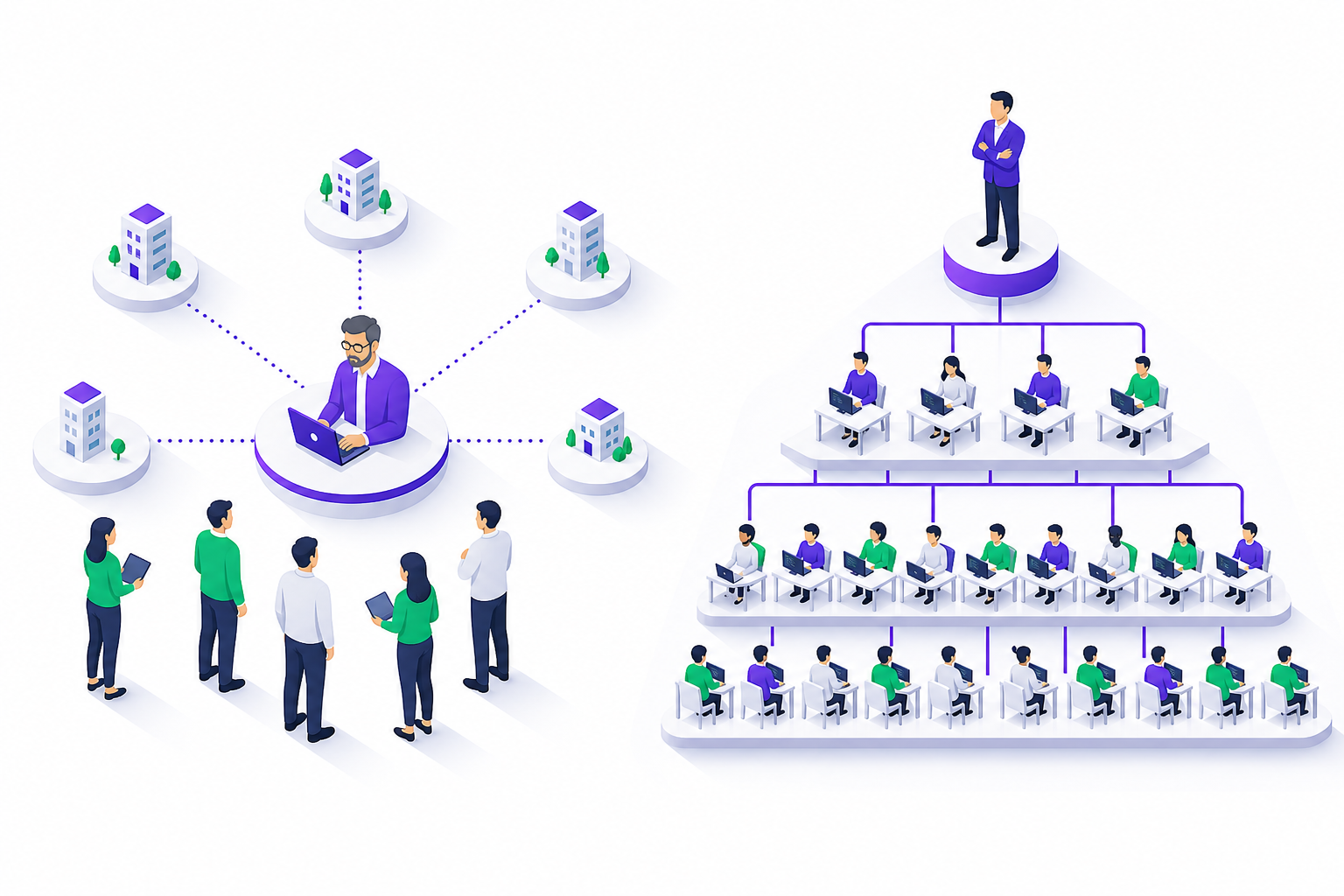
A fractional CTO is a senior technical leader who works with you 10-20 hours a week (sometimes less), typically split across 2-4 clients. You get architecture decisions, vendor and hiring judgment, a technical roadmap, and someone who has seen the mistakes before, without the fully loaded cost of a C-suite hire. What you don't get is someone embedded in daily standups, doing code review on every PR, or managing a 12-person team's performance cycle.
A full-time CTO is embedded. They're in your Slack all day, they own the engineering org's hiring and performance, and they carry the technical roadmap as their single full-time responsibility. The tradeoff is cost and commitment, both financial and in the time it takes to recruit, vet and onboard the right person. 2026 recruiting benchmarks put the search itself at 8 to 16 weeks from kickoff to signed offer at Series B/C companies, and that is before a notice period. For a genuine CTO-caliber hire in India, plan on 4-6 months before they are actually working with you.
What a Fractional CTO Cannot Do
Being honest about limits is what makes the fractional model work. A fractional CTO cannot be your on-call escalation at 2 a.m. when production is down. They cannot run daily standups, mentor junior engineers through every pull request, or hold a team accountable sprint after sprint. They also cannot absorb a sudden spike in work: if your backlog needs 30 hours of senior technical decisions in a week, a 15-hour engagement will bottleneck the whole team.
That doesn't make the model weaker. It makes it specific. Fractional works when the job is judgment: what to build, what to buy, who to hire, which architecture will not need a rewrite in a year. It stops working when the job is management at volume. Knowing which job you actually have is the whole decision.
The Stage-by-Stage Decision Framework
Use engineering headcount and fundraising stage as your primary signals, not "what feels more legitimate."
- Pre-seed / idea stage, 0-2 engineers: Fractional CTO, almost always. You need someone to validate the build-vs-buy decisions and stop you from architecting for a scale you don't have yet.
- Seed, 2-5 engineers, pre-PMF: Fractional CTO, ideally the same person who has been with you since pre-seed. Continuity matters more than title here.
- Post-seed / early Series A, 5-8 engineers: This is the transition zone. If technology is your core differentiator (proprietary ML, real-time infra, complex data pipelines), start the full-time search now, because it takes months. If your differentiation is distribution, sales, or a thin technical layer, fractional can stretch further.
- Series A closed, 8-12+ engineers: Full-time CTO. Investors expect a committed technical executive, and at this headcount someone needs to own performance reviews, career ladders and sprint accountability every single week. A fractional engagement structurally can't do that.
- Series B and beyond: Full-time CTO is non-negotiable. A fractional arrangement at this stage reads to investors and senior engineering candidates as "this company hasn't figured out its technical leadership," which becomes a hiring and fundraising liability.
The Cost Math, Side by Side
We covered India-specific fractional CTO pricing in detail in our benchmarks post. The short version is ₹50,000 to ₹3,00,000 per month depending on scope and hours.
Full-time CTO cost is where founders get surprised. Published 2026 India hiring benchmarks put cash compensation for a CTO at a Series B/C company at roughly ₹70 lakh to ₹2.2 crore a year, with equity of around 0.5% to 4% on top. Early-stage CTOs often take lower cash and more equity, which is why our table shows a wider monthly range. Treat all of these as indicative: the real number depends on your stage, your city and whether the CTO is a first-timer or has a prior exit.
| Factor | Fractional CTO | Full-Time CTO |
|---|---|---|
| Typical monthly cost (India) | ₹50,000 - ₹3,00,000 | ₹4,00,000 - ₹10,00,000+ (cash plus amortized ESOP, stage dependent) |
| Time to hire | 1-3 weeks | 4-6 months including notice period (8-16 weeks of search alone) |
| Weekly availability | 10-20 hours, often shared across clients | Full-time, embedded in daily operations |
| Best for | Roadmap, architecture, vendor and tooling decisions, hiring your first engineers | Owning the engineering org, performance management, 1:1s, scaling process |
| Investor perception | Fine pre-Series A; a flag if unchanged post-Series A | Expected from Series A onward |
| Exit cost if it doesn't work | Low: end the engagement, no severance complexity | High: recruiting cost, notice period, team disruption |

The Hybrid Model Most Founders Miss
The cleanest transition we've seen isn't a hard switch. It's an overlap. Keep the fractional CTO engaged at reduced hours (5-8 hours a week) for 2-3 months after the full-time CTO starts. The fractional CTO hands over architectural context and vendor relationships, the full-time CTO gets a running start instead of a cold one, and you avoid the knowledge gap that causes most of the technical debt spikes we see in the first six months of a new CTO's tenure. It costs a little more for a quarter. It saves far more than that in avoided rework.
We ran this exact model with a fintech client: fractional CTO through their ₹4 crore seed round and first 6 engineers, full-time CTO search kicked off the day the Series A term sheet was signed, and a 10-week paid overlap where the fractional CTO ran weekly architecture handoff sessions. The full-time CTO was shipping independently by week 4 instead of the usual 10-12 weeks of ramp-up we typically see without a structured handoff.
Signals You've Waited Too Long to Switch
- Engineers are asking "who's actually accountable for this roadmap" in retros.
- Your fractional CTO is capped at 15 hours a week but the backlog needs 30+ hours of technical decision-making weekly.
- Investors or board members have directly asked about full-time technical leadership in the last two board meetings.
- You're losing senior engineering candidates in interviews because there's no full-time technical leader to sell the vision.
Quick-Win Action Steps
- Map your current engineering headcount and funding stage against the framework above and identify which zone you're in today.
- If you're in the 5-8 engineer transition zone, start full-time CTO sourcing now, even if you're 3-4 months from needing them to start.
- Read our guide on what a fractional CTO actually does if you're still unclear on scope before making the call.
- Budget for a 2-3 month paid overlap if you do transition. Don't cut the fractional CTO off the day the full-time hire signs.
- Revisit this decision every fundraising round. The right model at seed is rarely the right model at Series B.
Conclusion
There's no universally "better" model, only a better fit for your current stage, technical complexity and fundraising trajectory. Most Indian startups underestimate how early the full-time transition needs to start (recruiting takes months) and overestimate how quickly a fractional CTO becomes "not enough." Use headcount and funding stage as your triggers, not vibes.
Ready to implement this for your business? Talk to the Rian Infotech team
Sources for compensation and hiring-time benchmarks: TheHireHub.AI, "How to Hire a CTO in India (2026 Guide)" and "VP Engineering vs CTO India 2026." Figures are indicative.
Frequently Asked Questions

Rishav Shankar
Rishav Shankar is a calm-tech architect who blends AI, engineering, and psychology to design systems that think before they act. He builds products that turn complex human problems into intuitive digital experiences, redefining how founders and teams operate. At the intersection of automation, strategy, and imagination, Rishav is creating the future one intelligent workflow at a time.
Comments
Loading...