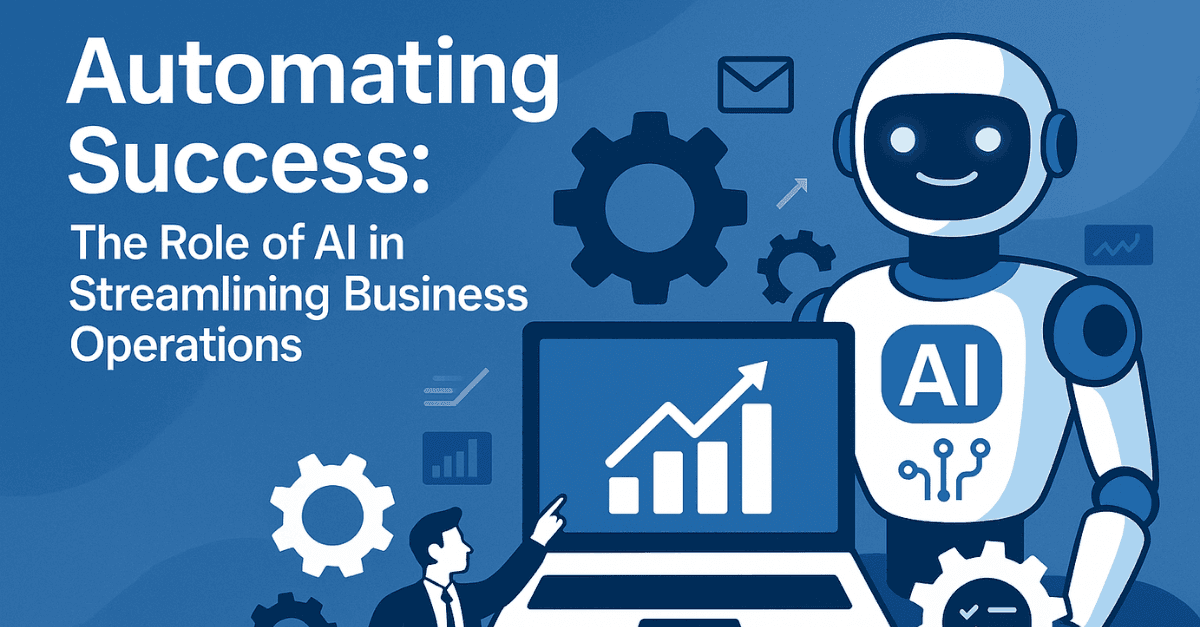
Automating Success: The Role of AI in Streamlining Business Operations
In today's fast-paced business environment, efficiency is paramount. Companies are constantly seeking ways to streamline operations, reduce costs, and improve overall productivity. One of the most transformative tools in achieving these goals is Artificial Intelligence (AI). By automating various aspects of business operations, AI not only enhances efficiency but also enables organizations to focus on strategic growth. In this blog post, we will explore how AI is revolutionizing business operations through automation, data analysis, and customer engagement.
The Power of Automation
Automation is at the heart of AI's impact on business operations. By automating repetitive tasks, companies can free up valuable time and resources. Here are some key areas where AI-driven automation is making a significant difference:
Administrative Tasks: AI systems can handle scheduling, data entry, and document management, reducing the burden on employees.
Supply Chain Management: AI algorithms optimize inventory levels, predict demand, and streamline logistics, resulting in cost savings and improved service delivery.
Financial Operations: From invoicing to fraud detection, AI can manage various financial tasks with greater accuracy and speed.
"Automation is not just about replacing human labor; it’s about augmenting human capabilities to achieve greater efficiency."
By implementing these AI-driven automation tools, businesses can see a marked improvement in operational efficiency, allowing employees to focus on higher-value tasks that require creativity and strategic thinking.
Data-Driven Decision Making
Another significant advantage of AI in business operations is its ability to analyze vast amounts of data quickly and accurately. Data-driven decision making is crucial for businesses aiming to stay competitive. Here’s how AI is facilitating this process:
Predictive Analytics: AI algorithms can analyze historical data to forecast trends, enabling businesses to make proactive decisions.
Market Insights: AI tools can sift through market data, identifying patterns and consumer behaviors that inform product development and marketing strategies.
Performance Tracking: AI can monitor key performance indicators (KPIs) in real-time, providing organizations with immediate feedback to correct course as necessary.
By leveraging AI for data analysis, businesses can make informed decisions that not only enhance operational efficiency but also drive innovation and growth.
Enhancing Customer Engagement
In addition to streamlining operations and improving decision-making, AI is also playing a pivotal role in enhancing customer engagement. Businesses that utilize AI can create personalized experiences that resonate with their customers. Here are some ways AI is enhancing customer interactions:
Chatbots and Virtual Assistants: AI-powered chatbots provide 24/7 customer support, answering queries and resolving issues in real-time.
Personalized Marketing: AI can analyze customer data to deliver personalized recommendations and targeted advertising, increasing conversion rates.
Feedback Analysis: AI tools can analyze customer feedback from various channels, helping businesses understand sentiment and improve services.
"The future of customer service lies in AI-driven personalization. Customers expect tailored experiences that reflect their unique needs."
By enhancing customer engagement through AI, businesses can foster loyalty and build long-lasting relationships with their clientele, ultimately driving sales and revenue growth.
Conclusion
The integration of AI into business operations is no longer a futuristic concept; it’s a current reality that is reshaping the landscape of how organizations function. From automating routine tasks to enabling data-driven decision making and enhancing customer engagement, AI is proving to be an invaluable asset in streamlining operations and driving success.
As we continue to embrace technological advancements, businesses that leverage AI effectively will not only improve their operational efficiency but also position themselves for sustained growth in an increasingly competitive marketplace.
In conclusion, embracing AI is not just a strategy; it’s a necessity for businesses aiming to thrive in the modern economy. The future is here, and it’s automated.

Rishav Shankar
Rishav Shankar is a calm-tech architect who blends AI, engineering, and psychology to design systems that think before they act. He builds products that turn complex human problems into intuitive digital experiences, redefining how founders and teams operate. At the intersection of automation, strategy, and imagination, Rishav is creating the future one intelligent workflow at a time.
Comments
Loading...